As part of ‘Tyre Safety Month’ our previous blog explained the information you can find on new tyres, what all the markings mean and a fun knowledge-based factsheet which tells the most unusual facts about tyres.
This second part of the blog communicates the necessary checks you need to make regularly to keep your tyres in tip-top shape. Just like maintaining other parts of your car, if tyres are looked after properly, they can last for many years to come without being replaced. Maintaining your tyres should be simple as checking the tread depth, tyre pressure, and driving carefully. Continue reading if you would also like to know how long tyres last and whether you need to consider purchasing a spare wheel.
7. Tread Depth
Tread is the rubber on the tyre that has contact with the road. When you drive the tread will wear down gradually over time. Tyres with tread depth below 1.6mm lack grip, which can mean the braking distance and vehicle control will be impaired. Tyres under 1.6mm must be replaced as soon as possible. It is the UK law that minimum tread depth needs to be 1.6mm for car tyres.
It is also important to note that cars need to be equipped with the correct seasonal tyres. Although this is not compulsory, as many drivers will have fitted all season tyres designed to adapt it the changing weather conditions.
If you have a tread depth gauge, use it to measure tyres tread depth. Alternatively, you can use a small ruler. There are many videos online which explain how to measure your tread depth. If you are unsure, drop your car over to one of our service centres. While measuring the tread, look for small scoops or divots carved from the tread. Also look out for bulges in the tyre which can cause internal tyre damage.
8. Tyre Pressure
Keeping in track of your cars tyre pressure will help to extend the life of your tyres which would in turn improve your vehicle’s safety and fuel efficiency. Tyre pressure is measured by calculating the amount of air that has been pumped into the inner lining of the tyre in pounds per square inch (PSI) or BAR pressure.
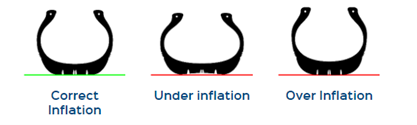
Looking at the image above, underinflated tyres will typically have uneven contact with the road and will exhibit excessive wear and tear on the outside edges of the tread. Your tyres will also experience an increased rolling resistance with the road which means increased CO2 emissions and reduced fuel efficiency.
Overinflation means that too much air has been put into the tyres. The tyres will have much smaller contact with the road which means less traction and poor braking distance. High tyre pressure can lead to shorter tyre lifespan when incorrectly inflated because of heavy and uneven wear across the central part of the tyre.
Correct tyre inflation on the other hand means you have found the perfect air pressure in the tyre. A lot of air is lost during warm weather, so regular checks are a must when temperatures rise and your car travels long distances. You will normally find your recommended tyre pressure information in your vehicle handbook, otherwise check the driver’s door or on the inside of the fuel tank flap. Knowing your recommended tyre pressure information is important because some cars have different guidelines for the front or back tyres of the car.
9. How Long Do Tyres Last?
In relation to the information above, how long your tyres last depend on how they are being maintained. The general recommendation is to change your tyres after 3-10 years or every 20,000 miles. Changing your tyres can come sooner if you notice the following:
- The tread has worn down.
- Cracks and holes in the rubber.
- Air Pressure is drastically being lost more than it should.
- Wobbly wheels – check to see your car wheels are properly aligned to avoid problems like above or other vehicle issues such as stability and handling.
According to Kwik-Fit your tyres should last 20,000 miles before being changed. Rear tyres may last longer, although that depends on the make and model of the car.
If you have space available, it is important to have a spare wheel. This is usually located in the boot of your vehicle. The spare wheel should be a temporary fix and should not be used as a permanent solution. It is recommended not to drive more than 50 miles on a spare tyre. If you have any problems or wish to have a professional check the tyres of your car, click this link for more information and how to book a service.
Please note, new cars may not come with conventional spare tyres. Instead, spares have been replaced by space-savers accounting for 30%, while 55% of cars now come with only tyre repair kits.
10. Spare Tyre
Despite spare tyres being slowly phased out by space-savers and tyre repair kits, they still serve a purpose that can you in a stranded situation. Here are some facts you need to know about spare tyres.
Spare tyres can vary in size depending on your vehicle and should only be used as a temporary solution to get your car to the nearest garage. They should not be used as a permanent solution. Much like space-savers, they cannot be used at speeds of more than 50mph. car owners can find the recommended speed printed on a sticker on the side of the wheel. If unable to find the sticker, try keeping your maximum speed to 30mph until you find help.
Here are some must-know rules for keeping and hopefully one day using a spare tyre. Always remember to:
- Ensure it is properly inflated: check the tyres’ air pressure before setting off on a long journey or drive. All tyres slowly expel air over time even when not being used.
- Check for any damages: it is important to also check the tyre for any signs of wear and tear which might cause a puncture. Nothing is worse than being stranded because your spare tyre is also unusable. Buying a brand-new spare tyre is essential and recommended.
- Watch your speed limit: Try keeping your maximum speed to 30mph until you find help at your local garage.
Keep it a short distance Drive: Take into consideration, a spare tyre is a temporary solution to get you to the nearest garage or tyre dealer.
If you are finally reading this, it is important to note that tyres can be costly to replace. This is why at the slightest chance you see your tyres showing some wear, try to locate the issue of the problem before anything serious happens. If your tyres are wearing out quickly and you feel like you need a professional opinion, book a service at one of your local Richmond Service Centres or visit our aftersales page for more information.
Our expertly trained technicians will assess the condition of your tyres to understand the cause of any problems. If further repair works are needed, we will advise upfront before any work is carried it.